English
The price of an automatic tissue processor cannot be judged from the instrument alone. A useful quotation must reflect specimen volume, processor architecture, reagent capacity, safety controls, installation and after-sales service. A low initial figure may become expensive if the unit requires frequent reagent changes, cannot handle peak workload or causes avoidable downtime.
An automatic tissue processor is a laboratory instrument that moves fixed tissue specimens through controlled dehydration, clearing and paraffin-infiltration steps before embedding and microtomy.
Tissue preparation also sets practical limits on equipment performance. The NCBI Bookshelf notes that routine specimens are commonly cut to less than 0.5 cm thick because thicker tissue can prevent adequate penetration during subsequent processing. A processor cannot compensate for poor grossing, inadequate fixation or an unsuitable protocol.
Most professional systems are sold by quotation rather than by a universal list price. The final amount may include more than the base machine:
The processor, baskets, reagent containers, paraffin baths and standard accessories
Freight, insurance, import duties and delivery to the laboratory
Installation, calibration, operator training and protocol setup
Warranty coverage, preventive maintenance and an initial spare-parts package
Two quotations that appear similar can therefore represent different scopes. One may cover ex-works equipment only, while another may include commissioning, training and local technical support. Before comparing totals, laboratories should ask suppliers to separate equipment, logistics, installation, consumables and service costs.
This also makes quotations easier to compare across different countries. Import duties, power-supply configuration, local installation requirements and the availability of trained service engineers may substantially change the final project cost even when the base equipment configuration is similar.
The largest price differences usually come from the way the system handles tissue, reagents and unexpected workflow interruptions.
Processing capacity: Cassette volume should cover routine workload and predictable peaks without forcing the laboratory to pay for unused capacity.
Processor design: Open carousel, basket-transfer, enclosed retort and vacuum-pressure systems use different mechanical and fluid-handling architectures.
Reagent management: Automatic rotation, replacement reminders, contamination controls and waste handling add complexity but may reduce routine intervention.
Safety and vapor control: Sealed lids, carbon filtration, leak checks and alarms may affect both equipment price and facility requirements.
Automation level: Stored protocols, touch-screen controls and power-failure recovery influence usability and workflow continuity.
Service scope: Training, warranty terms, technical response time and spare-parts availability belong in the purchase decision.
Safety-related configurations also affect tissue processor cost. Because formaldehyde and other volatile chemicals may be present during histology processing, buyers should compare chamber sealing, vapor filtration, leak detection and compatibility with the laboratory’s ventilation system. These features can influence both the equipment quotation and the site preparation required before installation.
A small laboratory may value a straightforward instrument with dependable protection functions, while a larger pathology department may need higher cassette capacity, more reagent control and better recovery from interruptions.
The right tissue processing machine should therefore be selected from actual workload data rather than from the largest published capacity.
| AMOS Model | Processing Approach | Published Configuration | Features Relevant to Purchasing |
| ATP140 | Basket-transfer processor | 466 W; 1235 × 475 × 590 mm; 70 kg | Basket obstacle protection, sealed covers, active-carbon filtration, manual adjustment and power-failure protection |
| ATP200 | Carousel system | Three baskets; 85 cassettes per basket; 2 L beakers; up to 255 cassettes | Programmable protocols, bath-change control, paraffin temperature protection and UPS-supported continuity |
| AVTP2500 | Enclosed vacuum-pressure retort | Up to 300 cassettes; 4.5 L reagent volume; nine reagent bottles; three paraffin baths | Automatic reagent replacement, seal checking, separate reagent and wax valves, power-failure recovery and a 10-inch touch screen |
The ATP140 is designed as a controlled basket-transfer system. Its official product information describes obstacle protection for the hanging basket, sealed covers, active-carbon filtration and procedures for protecting tissue during a power interruption lasting more than five minutes.
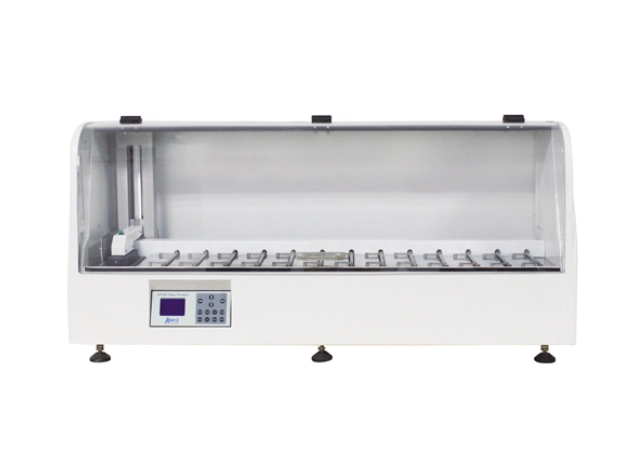
The ATP200 carousel tissue processor uses multiple stainless-steel baskets and visible bath progression. AMOS lists three baskets with a capacity of 85 cassettes each, along with programmable protocols, bath-change controls and temperature protection for the paraffin stations.
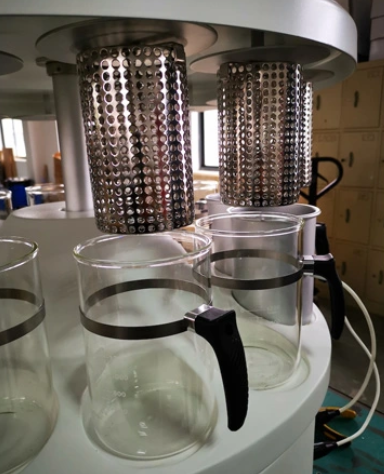
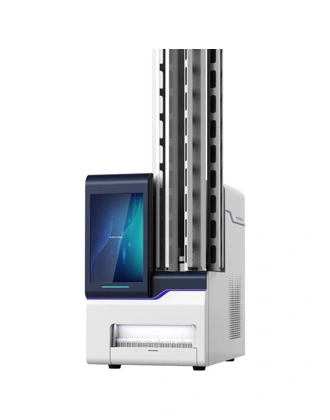
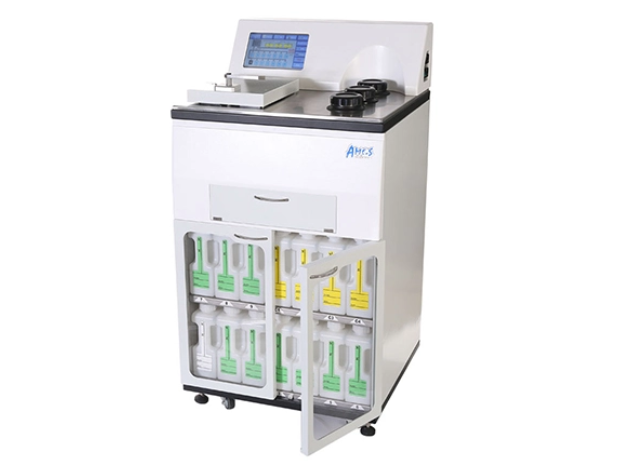
For higher-volume enclosed processing, the AVTP2500 uses a retort-based vacuum-pressure design. Its published specification includes capacity for up to 300 cassettes in three baskets, nine reagent bottles, three paraffin baths and automatic reagent-replacement functions.
These models should not be compared by cassette capacity alone. Specimen mix, batch frequency, overnight processing, operator availability and room infrastructure can be just as important as the maximum number printed on a specification sheet.
Reagents can influence operating cost for years after the equipment invoice is paid. Ethanol, clearing agent, paraffin, cleaning solutions, filters and waste disposal all need to be included. The cheapest processor to purchase is not necessarily the least expensive to operate.
A practical cost model should track reagent volume per change, replacement frequency, cycles between changes, rejected or reprocessed blocks, cleaning time and waste collection. Closed or automated reagent-management functions may reduce handling, but the savings depend on actual workload and laboratory practice.
The AVTP2500 specification, for example, lists nine reagent bottles with a maximum volume of 5 L each, four cleaning bottles and a separate waste-reagent bottle. The value of that configuration depends on how the laboratory rotates reagents, organizes protocols and documents reagent quality.
The equipment quotation should therefore be reviewed together with a proposed operating protocol. This helps the laboratory estimate monthly reagent demand instead of treating the processor as an isolated capital purchase.
A lower purchase price may be appropriate for a laboratory with modest specimen volume and simple protocols. It becomes less attractive when the equipment requires excessive manual handling, frequent replacement of low-cost components or long delays for technical assistance.
The total cost of ownership normally includes equipment depreciation, reagents, cleaning materials, filters, preventive maintenance, spare parts, labor and downtime. Laboratories should also consider the cost of repeating poorly processed tissue, although this is more difficult to calculate than reagent consumption.
An instrument with a higher initial price may deliver better long-term value when its capacity is properly utilized and its automation reduces repetitive work. However, advanced functions should not be purchased simply because they are available. Every feature should solve a defined workflow, quality or safety requirement.
A technically suitable instrument can still become a poor investment if support is unclear. Before selecting a automatic tissue processor manufacturer, request written answers to the following:
Which baskets, containers, filters, tools and UPS components are included?
Who performs installation, calibration and operator training?
What does the warranty cover, and which labor or travel costs are excluded?
Are operation manuals, maintenance schedules and troubleshooting documents supplied?
Where are common spare parts stocked, and how is technical support provided?
Can the supplier recommend protocols for the laboratory’s specimen types without claiming that one protocol fits every tissue?
Optional items should be shown separately in the quotation. This prevents a lower base price from hiding essential additions and makes future upgrades easier to plan.
The supplier should also request meaningful application information before recommending a model. Daily cassette volume alone is not enough. Large fatty specimens, small biopsies, decalcified tissues and research samples may require different processing schedules even when the number of cassettes is similar.
Automatic tissue processor price is shaped by capacity, architecture, reagent handling, safety controls and after-sales support. Compare complete configurations rather than headline figures, and calculate operating cost alongside the purchase price. The best system is the one that fits specimen volume, workflow and support requirements without paying for capacity that will remain unused.
There is no reliable universal price because capacity, shipping, installation, training and service coverage vary by project. Laboratories should request an itemized quotation based on workload, destination and required support rather than rely on an unconfigured online price.
Use average daily volume, peak volume and expected growth. The selected system should leave reasonable room for busy days without requiring the laboratory to operate a much larger reagent system than it needs.
No. Vacuum-pressure processing offers enclosed fluid movement and greater automation, while a carousel design may provide a more straightforward workflow. The better option depends on throughput, specimen mix, staffing, safety requirements and budget.
They require additional valves, sensors, containers and software controls. These features may reduce manual handling and improve consistency, but their financial value depends on reagent use, labor cost and processing volume.
Provide expected cassettes per day, peak batch size, tissue types, preferred processing schedules, electrical supply, destination, installation conditions, training needs and required warranty coverage.
Not automatically. An oversized processor may use more reagents, occupy more space and increase operating cost without improving workflow. Capacity should be matched to realistic batch volumes and future growth rather than selected as an isolated performance number.